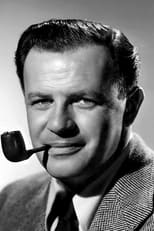
Joseph L. Mankiewicz
1909-02-11
The Biography
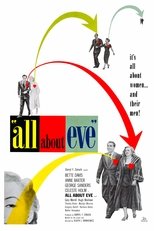
Joseph Leo Mankiewicz (/ˈmæŋkəwɪts/ MANG-kə-wits; February 11, 1909 – February 5, 1993) was an American filmmaker. A four-time Academy Award winner, he is best known for his witty and literate dialogue and his preference for voice-over narration and narrative flashbacks. Also known as an actor's director, Mankiewicz directed several prominent actors, including Bette Davis, Humphrey Bogart and Elizabeth Taylor, to several of their memorable onscreen performances. Born in Wilkes-Barre, Pennsylvania, Mankiewicz studied at Columbia University and graduated in 1928. He moved overseas to Europe, where he worked as a foreign correspondent for the Chicago Tribune and translated German intertitles into English for UFA. On the advice of his screenwriter brother Herman, Mankiewicz moved back to the United States, and was hired by Paramount Pictures as a dialogue writer. He then became a screenwriter, writing for numerous films starring Jack Oakie. He next moved to Metro-Goldwyn-Mayer (MGM), where he served as a producer for several films, including The Philadelphia Story (1940) and Woman of the Year (1942). Mankiewicz left MGM after a dispute with Louis B. Mayer. In 1944, Mankiewicz began working for Twentieth Century-Fox, where he produced The Keys of the Kingdom (1944). He made his directorial debut with Dragonwyck (1946) after Ernst Lubitsch had dropped out due to illness. Mankiewicz remained at Fox, directing a broad range of genre films. Consecutively, in 1950 and 1951, he won two Academy Awards each for writing and directing A Letter to Three Wives (1949) and All About Eve (1950). In 1953, Mankiewicz formed his own production company Figaro, where he independently produced, as well as wrote and directed, The Barefoot Contessa (1954) and The Quiet American (1958). In 1961, Mankiewicz took over direction from Rouben Mamoulian for Cleopatra (1963). Production was beset with numerous difficulties, including a heavily publicized extramarital affair between stars Taylor and Richard Burton. Relatively late into production, Darryl F. Zanuck reassumed control of Fox as studio president and briefly fired Mankiewicz for excessive overruns. Released in 1963, Cleopatra became the year's highest-grossing film and earned mixed reviews from critics. Mankiewicz's reputation suffered, and he did not return to direct another film until The Honey Pot (1967). Mankiewicz then directed There Was a Crooked Man... (1970) and the documentary King: A Filmed Record... Montgomery to Memphis (1972), sharing credit with Sidney Lumet on the latter. His final film Sleuth (1972), starring Michael Caine and Laurence Olivier, earned Mankiewicz his fourth and final Oscar nomination as Best Director. In 1993, Mankiewicz died in Bedford, New York, at the age of 83.